
Brands are rarely experienced in the way internal teams expect. In fact, the way we come across brands is more fragmented than ever before, and once you acknowledge that, it becomes clear why collaboration and a connection of your brand, search and social strategies is absolutely essential.
One of my favourite strategy creators, Eugene Healey, talks about this in his ‘brand as a mosaic’ video (worth a watch). He references the parable of the blind men and the elephant, how each person touches a different part of the animal and comes away with a totally different idea of what it is. That’s how people experience your brand.
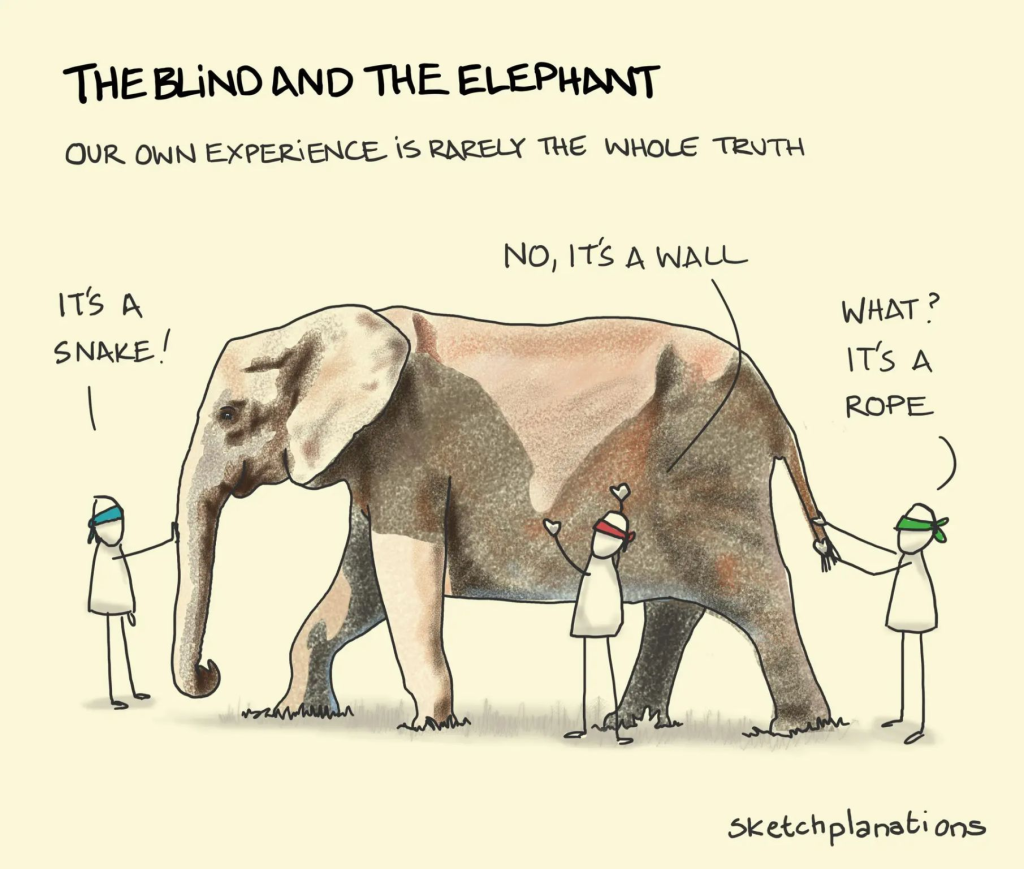
Most people don’t meet your brand through your perfectly polished TV ad or carefully crafted About Us page anymore. So, how do we ensure that our potential customers are getting the idea of the brand that we want?
Search can be a key factor that starts stitching those fragmented moments back together. Before someone really knows your brand, they might have stumbled across it through:
- TV
- OOH
- Google Search
- Social Media
- Word of Mouth (including online reviews)
- What AI thinks of you
And let’s be honest, there’s a very good chance the teams responsible for each of those touchpoints don’t actually talk to one another. Someone who finds you on TikTok is probably getting a totally different impression of the brand to someone who found you via a non-branded search, to someone who heard an ad on the radio.
Right now, there’s a lot of talk about how search should be driven by brand, how SEOs need to be brand builders, how social media needs to feed brand, how everything should push someone to either come directly to your site or go back to search and look for your brand + your category.
But even search is fragmented:
- Who is your brand in Google’s organic rankings?
- Who are you in AI Overviews?
- Who does AI think you are based on its chosen sources?
- What do your Google Business profiles say about you?
- What about all the different SERP features, both site-driven and platform-driven?
- And what happens when that search doesn’t even start on Google?
This all calls for proper collaboration. All of these teams need to be pulling up a chair and sharing what they know, not just their outputs, but the data behind them.
- What can you create that continues the story from your latest TV campaign?
- How does your best-performing social video translate into long-form content?
- Could your blog be repurposed as short-form videos?
Your search strategy should flow directly from your brand strategy. When it does, your scattered presence across different channels starts to converge into something consistent — something memorable.
Traditional brand building works top-down. Search feeds brand by working bottom-up from product or categories. Meet in the middle, and you start to build the kind of brand + category associations that actually stick.
That’s where search is headed. And that’s what it really means for SEO and brand to come together.
Image: Jono Hey, sketchplanations.com