

AI isn’t pushing us into some futuristic version of brand building; it’s resetting back to how people used to experience brands. And the businesses that succeed in the age of AI won’t be the ones trying to game it. They’ll be the ones that understand a simple truth: your brand is no longer the hero in your customer’s story.
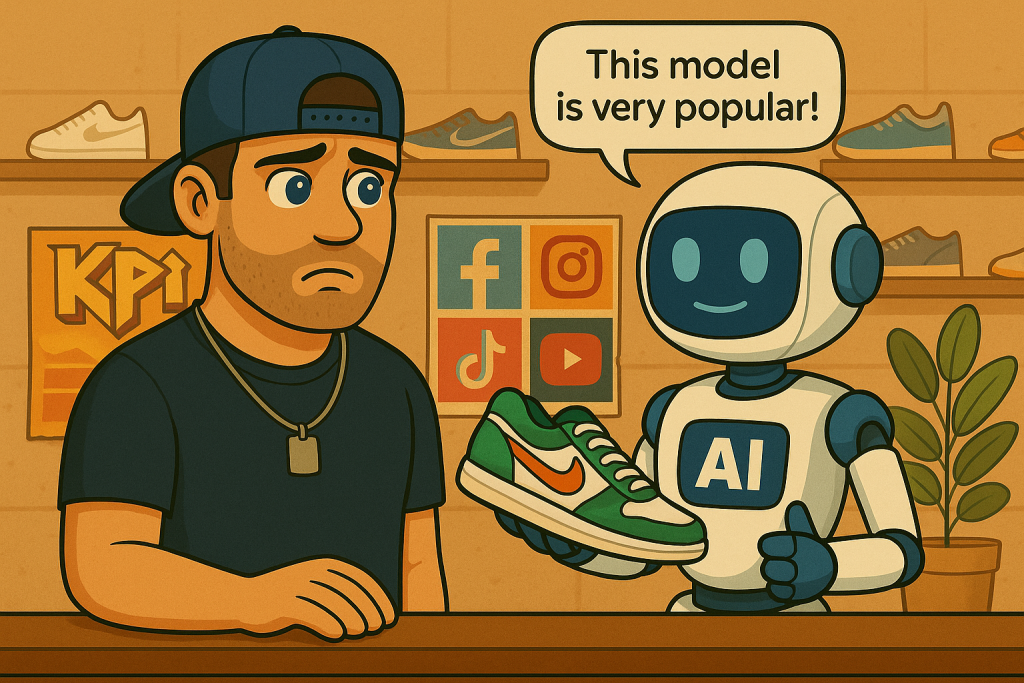
For years, brands have created content strategies based on search volume for it. But AI doesn’t care about search volume. It’s designed to answer questions, not always to send you traffic. That changes the game completely, but it doesn’t eliminate the need for your brand. It just shifts the spotlight.
Because once a customer gets their answer, they still need to decide where to go, what to buy, and who to trust. That’s your moment.
Why AI Will Reward Brands That Actually Know What They’re Talking About
We’re entering a time when brands will have to prove they actually know their stuff. That might sound obvious, but let’s be honest, it’s been too easy to spin up SEO content without showing any real-world experience or understanding.
That’s about to stop.
I firmly believe that AI is pushing us toward digital experiences that mirror pre-internet shopping. Think real conversations, helpful service, and actual expertise.
Travel agent? You’ll need to replicate the feeling of sitting down with someone to plan the perfect holiday. That means content that doesn’t just list top 10 beaches, but helps a customer build an entire trip, from airport transfers to excursions, because those are the questions AI will be asked.
Outdoor retailer? You’ll need to mirror the experience of a shopper walking in and asking, “What’s the best boot for wide feet if I’m climbing Scafell Pike this weekend?” If you can’t answer that clearly, consistently, and confidently, AI and the customer will find someone who can.
If you don’t deeply understand what your actual audience is doing with your products, not the use-cases on the box and not what the CEO wishes they did, then you’re going to struggle.
AI Is an Interaction, Not a Query
That’s the key mindset shift. AI isn’t just about a one-time search, it’s an ongoing conversation that your website won’t be part of. And that level of service has been missing from a lot of online shopping and digital content.
Creating content to solve problems is part of it. But the bigger challenge is giving AI, and your potential customer, a reason to choose you. That means your website, your off-site presence, your ecosystem, all of it needs to work together.
You need to build a joined-up brand experience that spans platforms and channels, rooted in expertise and relevance around a specific, ownable category. When you do that, your brand becomes an inevitable part of any interaction where your product is being discussed, considered, or searched for.
To move forward, we genuinely need to look back to the time of real customer service.
What You Can Focus on Now That Will Benefit You in Both Organic Search and AI
While everyone is scrambling to figure out how to appear in AI mode, take a breath. There are things you can do right now that strengthen your brand for both today’s search and tomorrow’s AI-led landscape.
📍 Google Business Profiles
If you have a physical location, this just became non-negotiable. AI mode pulls from across Google’s tools, and when it can, it’ll link directly to your Google Business profile rather than your website.
For multi-location businesses, this is a huge opportunity. But even if you only have a single HQ, you still need to make sure customers aren’t getting a dead-end experience. I’ve seen irrelevant head office profiles show up instead of better-suited URLs. You don’t want to be on the wrong end of that.
Even in traditional search, Google Business profiles often appear above organic results, so get them in shape.
🛒 Google Merchant Center Feeds
Retailers, your shopping feed is no longer just a paid media asset. SEOs and PPC teams need to work together to make this thing bulletproof.
AI doesn’t yet dominate retail results, but when it does, Google Shopping is going to play a big role. That means now’s the time to:
- Max out product data richness
- Chase that “Top Quality Store” badge
- Get your feed aligned with your brand’s voice and experience
It’ll help in traditional search too, especially with how crowded those results are becoming.
In conclusion..
AI isn’t here to replace your website. But it is here to challenge why a customer should visit it.
Your job now is to make sure your brand deserves to be part of the conversation. That means:
- Knowing your actual customers and their needs
- Offering the kind of advice they’d expect in-store
- Building connected experiences across every touchpoint
And most importantly, treating every AI interaction like a moment of real customer service.
Because in this new world, AI is the shop assistant, but it’s your brand that needs to close the sale.